

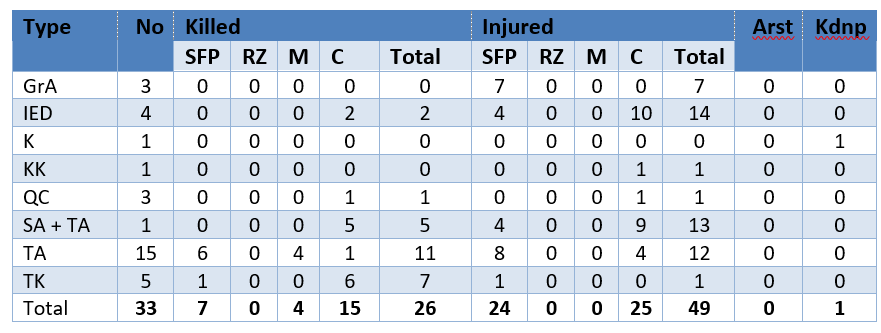
During 27 March – 2 April 2026, militant violence in Pakistan intensified, with 33 attacks recorded nationwide—up from 21 in the previous period—resulting in 26 fatalities and 49 injuries. Balochistan saw the highest number of incidents (17), while Khyber Pakhtunkhwa remained the most lethal, accounting for the majority of casualties. The pattern of violence continued to reflect dispersed, low-to-medium intensity attacks, with tactical assaults and targeted killings dominating, alongside growing use of IEDs and continued use of quadcopters. Militants appear to be deliberately avoiding high-casualty attacks while sustaining pressure through geographically spread operations. In response, security forces significantly escalated counterterrorism efforts, conducting 25 operations that killed 80 militants and disrupted networks across multiple regions, particularly in Balochistan and former FATA.
Pakistan’s economy is stabilizing gradually with IMF support and ongoing structural reforms, but remains vulnerable to external shocks, particularly the Middle East conflict. Rising oil prices, declining exports, widening trade deficit, and potential pressure on remittances are straining the external sector, while inflationary pressures have intensified due to sharp fuel price increases and subsidy reductions. The government is pursuing fiscal discipline and targeted social protection, but balancing economic stabilization with political and social costs remains challenging. Pakistan’s economic trajectory reflects cautious recovery overshadowed by global uncertainty and structural constraints.
Heightened political activity in Islamabad reflects growing consultations among key parties amid speculation about a potential 28th constitutional amendment. Meetings between PPP, JUI-F, and PML-N indicate emerging coordination on electoral matters, particularly upcoming AJK and Gilgit-Baltistan elections, as well as shared concerns over rushed legislation and possible changes affecting provincial autonomy. The engagements suggest that the government may be seeking broader political support for legislative initiatives, with opposition parties positioning themselves to influence the process and protect institutional balance.
Pakistan is positioning itself as a diplomatic intermediary in the Middle East crisis, with support from regional actors and backing from China through a five-point peace initiative. Islamabad’s efforts to facilitate US-Iran dialogue, combined with coordination with Muslim countries and engagement with global actors, reflect a strategic shift toward proactive diplomacy. However, deep mistrust between key parties, ongoing hostilities, and conflicting geopolitical interests continue to limit prospects for immediate progress, making Pakistan’s mediation both an opportunity and a high-stakes test of its diplomatic capacity.