
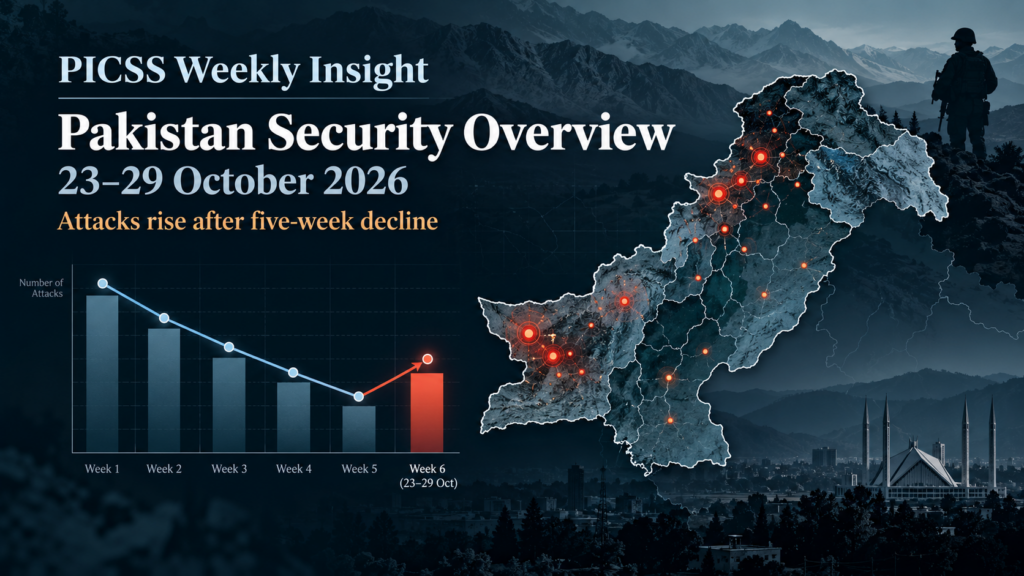
Militant attacks in Pakistan increased sharply during 23–29 October 2026, reversing five consecutive weeks of declining incidents and raising fresh questions about the sustainability of recent security improvements. The sudden resurgence comes amid growing tensions along the Pakistan–Afghanistan border, evolving militant tactics, and continued counter-militancy operations.
According to the latest Weekly Insight by the Pakistan Institute for Conflict and Security Studies (PICSS), the country recorded 31 militant attacks, compared with 21 in the preceding week, representing a 47.6% increase. Surprisingly, however, fatalities declined by 40.9%, from 22 to 13, while injuries increased from 11 to 15.
This contrasting trend presents an important question: does the growing frequency of attacks indicate renewed militant operational capacity, even as their immediate lethality declines?
Balochistan remained the most affected province, accounting for 15 attacks, while Khyber Pakhtunkhwa and the former tribal districts recorded eight incidents each. Particularly concerning was the 166.7% increase in attacks in the former FATA, suggesting a significant change in the geographical distribution and intensity of militant activity.
The week’s violence also revealed an evolving tactical landscape. Quadcopter attacks, targeted killings, kidnappings, roadside explosives and assaults on infrastructure continued to feature in militant operations. Meanwhile, security forces maintained operational pressure, reportedly killing 41 militants in separate actions.
Continue reading with PICSS
This content is available to Weekly Insight subscribers or by individual purchase.