
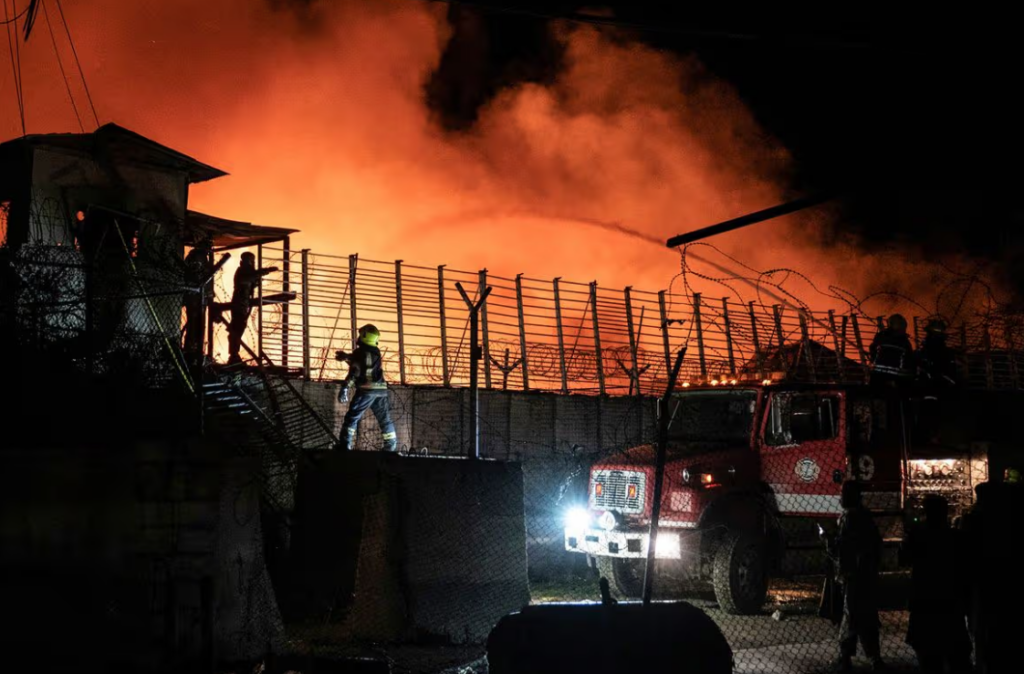
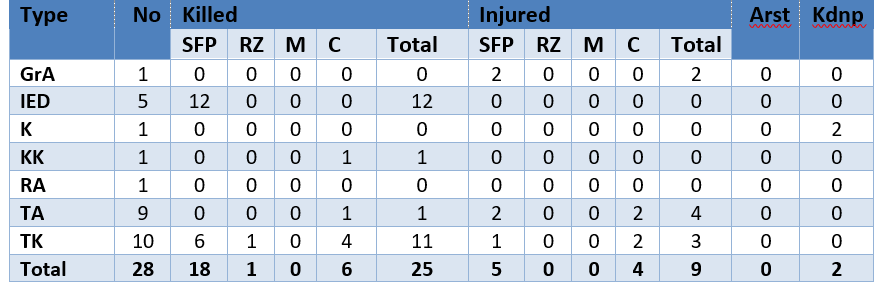
During the reviewed period (13–18 March 2026), militant violence in Pakistan declined in frequency but remained notably lethal, with 28 attacks resulting in 25 deaths and 9 injuries compared to 41 attacks the previous week. The lower number of injuries suggests reduced reliance on large-scale explosives, though IEDs continued to cause disproportionately high fatalities. Khyber Pakhtunkhwa remained the most affected region in terms of attacks (13 incidents), while Balochistan recorded the highest fatalities (12 deaths), reflecting sustained insurgent activity in districts such as Kech, Panjgur, and Gwadar. Targeted killings remained the most common tactic, with security personnel continuing to be primary targets, alongside tactical assaults and limited but deadly IED use. Meanwhile, security forces sustained pressure through 10 counterterrorism operations, killing 23 militants and arresting two, primarily in KP and Balochistan, indicating continued efforts to disrupt militant networks despite persistent threats.
The Khyber Pakhtunkhwa government placed the province on high alert ahead of Eidul Fitr by declaring multiple districts as sensitive and highly sensitive, mobilising law enforcement agencies, cancelling leaves, and enhancing deployments, particularly for Chand Raat. Hospitals were put on emergency footing, while district-level coordination focused on securing mosques, markets, and public spaces, alongside increased surveillance and community engagement, reflecting a proactive effort to prevent any security lapses during the festive period.
The arrest of a would-be female suicide bomber in Khuzdar highlights an evolving militant strategy of exploiting women for attacks, facilitated through radicalisation networks and social media. The case also underscores growing cooperation between militant groups such as the BLA and TTP, while demonstrating the increasing role of human intelligence and public support in counterterrorism efforts, even as authorities adapt security procedures to address these emerging tactics.
The ADB’s $10 billion Country Partnership Strategy (2026–2030) signals renewed international support for Pakistan’s economic reform agenda, focusing on private sector-led growth, inclusion, and resilience. While recent improvements—such as a current account surplus—indicate short-term stabilisation, these gains remain fragile, largely driven by import compression rather than structural export growth, with rising global oil prices posing additional risks, making sustained reforms and investment critical for long-term recovery.
Pakistan-Afghanistan tensions escalated sharply through sustained airstrikes, drone attacks, and cross-border exchanges, accompanied by competing narratives over targets and civilian casualties, particularly the controversy surrounding a Kabul strike. While Pakistan frames its actions as counterterrorism operations against TTP-linked infrastructure, the Taliban view them as violations of sovereignty. Despite Chinese-led mediation efforts and a temporary Eid truce, deep mistrust, unresolved disputes over militant sanctuaries, and continued military posturing suggest a fragile and volatile equilibrium with risks of renewed escalation.
The United States has identified Pakistan among countries with advancing missile capabilities that could pose a long-term threat, reflecting broader concerns about the global expansion of missile arsenals. However, analysts caution that Pakistan’s programme remains primarily India-focused, and its inclusion alongside major powers represents continuity in US threat assessments rather than a significant policy shift, even as regional instability and militant threats in South Asia continue to concern US policymakers.
Pakistan’s participation in a joint statement with 11 Islamic countries urging Iran to halt attacks on Gulf states reflects growing regional concern over the expanding US–Israel–Iran conflict. The coordinated stance condemns strikes on civilian infrastructure and emphasises adherence to international law, while highlighting risks to global energy security due to disruptions in key maritime routes. As Gulf states signal a tougher posture and Pakistan aligns diplomatically with regional partners while calling for restraint, the crisis appears to be moving toward broader regional confrontation with significant global implications.