


Abdullah Khan
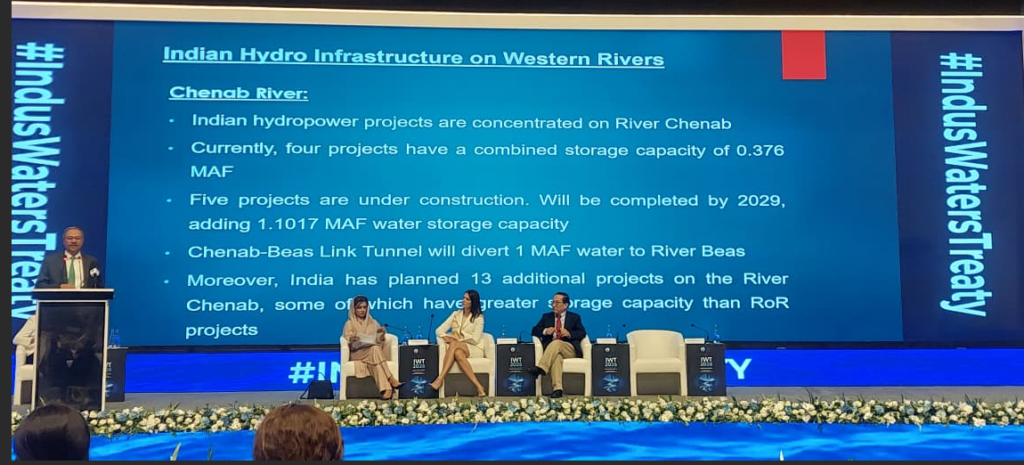
At the high-profile international seminar organized by Pakistan’s Ministry of Information and Broadcasting in Islamabad, the atmosphere was thick with existential dread. Held under the banner of “Indus Waters Treaty 2026,” the convention saw a procession of high-ranking Pakistani officials, state representatives, and policy experts delivering urgent declarations. The core consensus from the podium was singular and unyielding: the 1960 Indus Waters Treaty (IWT) must be preserved at all costs. To give these demands teeth, several speakers even issued veiled strategic warnings to New Delhi, framing any attempt to alter or dismantle the sixty-six-year-old water-sharing framework as a direct provocation that Pakistan would not tolerate passively.
While the panic in Islamabad is politically understandable, it is fundamentally misaligned with the realities of modern international law. The prevailing narrative in Pakistan treats India’s recent geopolitical maneuver—unilaterally holding the IWT in abeyance—as an unmitigated disaster for downstream security. This view is short-sighted. By attempting to freeze the treaty or step away from its structured obligations, New Delhi has not trapped Pakistan; it has inadvertently unshackled it. India’s “abeyance” strategy is a severe miscalculation that opens up unprecedented legal and diplomatic avenues for Islamabad. Rather than desperately pleading for a return to the 1960 status quo, Pakistani policymakers should recognize that a collapsed IWT strips India of its most potent legal shield and restores Pakistan’s inherent rights over all six rivers of the Indus Basin.
To understand why the dissolution of the treaty benefits Pakistan, one must look at what the 1960 accord actually did. The IWT was not a standard international water agreement based on sharing a unified basin; it was a surgical, artificial amputation. It completely severed the river system, granting India absolute and exclusive sovereignty over the three Eastern Rivers—the Ravi, Beas, and Sutlej—while reserving the Western Rivers for Pakistan. For over six decades, this framework legally barred Pakistan from demanding a single drop of water from the eastern tributaries, regardless of how severe its domestic water scarcity became.
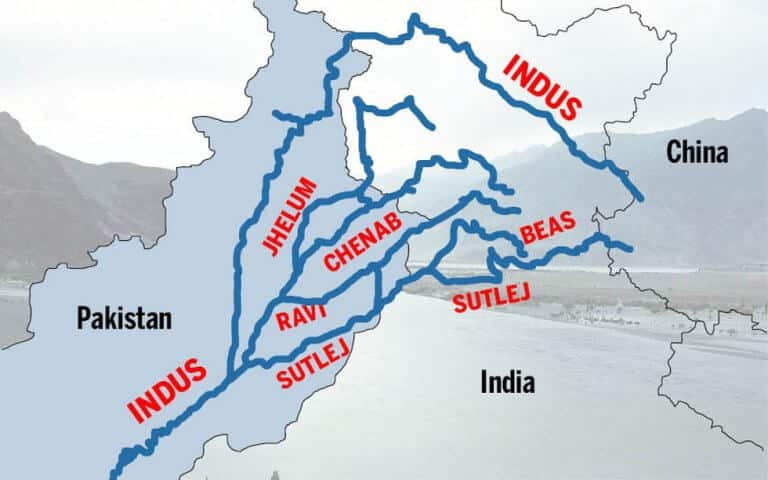
However, if India nullifies or walks away from the IWT, the artificial division of the rivers instantly vanishes. In the absence of a specific bilateral treaty, the shared watercourse automatically defaults to customary international law. Under the foundational 1966 Helsinki Rules and the 1997 United Nations Convention on the Law of the Non-Navigational Uses of International Watercourses, an international river system is legally recognized as an indivisible, single drainage basin.
Under this default international legal regime, Pakistan’s status as the lower riparian state grants it sweeping, inalienable rights that the 1960 treaty actively suppressed. No longer bound by the rigid geography of the IWT, Pakistan would hold a legitimate legal claim to the equitable utilization of all six rivers, including the Ravi, Beas, and Sutlej. International law thoroughly rejects the antiquated “Harmon Doctrine” of absolute territorial sovereignty, which assumed an upper riparian country could do whatever it pleased with water inside its borders. Instead, modern law dictates the principle of limited territorial sovereignty, bound by the strict obligation “not to cause significant harm” to downstream nations. Consequently, India would find itself legally prohibited from completely diverting or drying up the Eastern Rivers. It would be forced to guarantee a continuous, ecologically viable flow across the border to satisfy Pakistan’s agricultural and domestic needs.
This reality should serve as a stark wake-up call for the strategic establishment in New Delhi. By holding the treaty in abeyance to exert political pressure, India is playing a dangerous game that severely jeopardizes its own long-term interests. Under the structured terms of the IWT, Pakistan’s right to object to Indian engineering projects was strictly confined to specific technical parameters on the Western Rivers. India enjoyed a virtually free hand on the Eastern Rivers and possessed significant latitude for run-of-the-river hydroelectric installations elsewhere.
If the IWT is rendered void, India’s entire upstream infrastructure strategy crumbles into legal vulnerability. Pakistan would suddenly acquire the legal standing to challenge, block, or demand modifications to every single water, agricultural, and energy project India attempts to build across the entire Indus Basin. From the Kishanganga and Ratle projects to any future infrastructure on the Chenab, Jhelum, or the eastern tributaries, India would face an endless barrage of international litigation. Islamabad could systematically haul New Delhi before international tribunals, asserting that unilateral upstream developments violate the principle of equitable sharing and threaten downstream ecological stability. India would trade a predictable, highly favorable bilateral treaty for a chaotic landscape of international legal vulnerability.
Furthermore, India’s unilateral dismantling of a foundational water treaty sets a highly damaging precedent that could easily boomerang closer to home. India is not just an upper riparian power; it is also a vulnerable lower riparian state. To its north sits China, which controls the headwaters of both the Indus and the mighty Brahmaputra. If New Delhi normalizes the practice of holding water treaties in abeyance or ignoring downstream vulnerabilities for narrow political gains, it effectively legitimizes that exact same behavior for Beijing. China could easily use India’s own legal arguments to justify its own unilateral diversions, mega-dams, and water-blocking projects in Tibet, devastating India’s northeastern plains. By weakening the sanctity of transboundary water law in South Asia, India is handing China a potent geopolitical weapon to use against New Delhi.
The panic displayed at the Islamabad seminar on June 30 was a reflection of an outdated policy mindset. The narrative that Pakistan is entirely helpless without the IWT must be discarded. The treaty was a product of a specific Cold War era, signed at a time when international environmental law was in its infancy. Today, global legal frameworks are heavily weighted toward protecting downstream ecosystems and ensuring the equitable rights of lower riparian populations.
Instead of threatening India or begging for the preservation of a flawed status quo, Pakistan should approach India’s unilateral actions with quiet diplomatic confidence. If New Delhi wishes to render the Indus Waters Treaty a dead letter, Islamabad should let them. Pakistan must prepare its legal briefs, align its arguments with the 1997 UN Watercourses Convention, and signal to the world that it is fully ready to claim its due legal rights over all six rivers. If India chooses to step out of the orderly boundaries of the 1960 treaty, it will find itself drowning in a sea of international legal challenges it cannot win.