
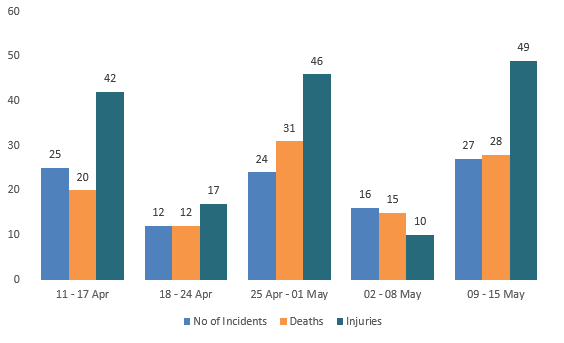
During the week of 09–15 May 2025, militant attacks in Pakistan surged notably, with 27 incidents compared to 16 the previous week, resulting in 28 deaths—including 12 security personnel—and 49 injuries. Balochistan witnessed the highest increase, particularly targeting indivNotnd ethnic insurgents as misguided proxies, promoting strict IS unity based on faith alone and denouncing ethnic nationalism as un-Islamic.
Following intense cross-border hostilities beginning on 7 May, including Indian missile strikes on Pakistani airbases and Pakistan’s retaliatory “Operation Bunyan-um-Marsoos” targeting multiple Indian military sites, tensions between India and Pakistan escalated sharply. The missile attack on Pakistan’s air bases including strategically crucial Noor Khan Airbase marked a pivotal moment prompting Pakistan’s robust military response and drawing international diplomatic intervention, especially by the US and Saudi Arabia, which helped broker a ceasefire agreement. While Pakistan welcomed US mediation and signalled readiness to resume comprehensive dialogue including Kashmir, India remained silent on this front, continuing its hardline counterterrorism posture. Despite hopes for dialogue, Pakistan remains wary of potential Indian provocations aimed at undermining its internal security and diplomatic progress, with India likely to persist in indirect measures such as economic and diplomatic pressure, targeted killings, and efforts to isolate Pakistan internationally. The episode has dented India’s government image domestically and internationally, while boosting Pakistan’s military prestige, but it underscores fragile peace and ongoing deep mistrust between the neighbours.
Afghanistan is navigating a shifting international landscape marked by growing engagement from regional powers like China, Russia, and Iran, who are emphasizing economic cooperation and regional stability while rejecting Western-led frameworks. Diplomatic signs of Taliban reintegration include ambassadorial recognition from China and outreach to France and Russia, though U.S. policy remains cautious and politically charged. Regionally, the Taliban are recalibrating ties through trilateral meetings with China and Pakistan, expanding trade with Iran, and managing complex dynamics with India and Pakistan. Domestically, the Taliban consolidate power through ideological governance and the General Directorate of Intelligence, despite widespread human rights concerns. Afghanistan’s future hinges on balancing internal control with the demands of an evolving global order and persistent security and humanitarian challenges.