
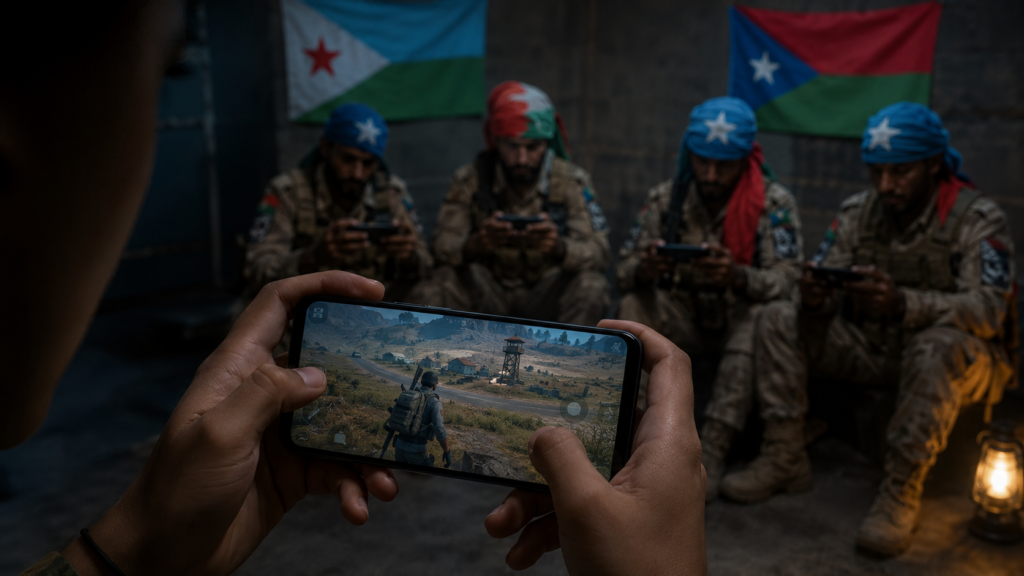

Research by Yasir Sial, report written by Aima Ishaq
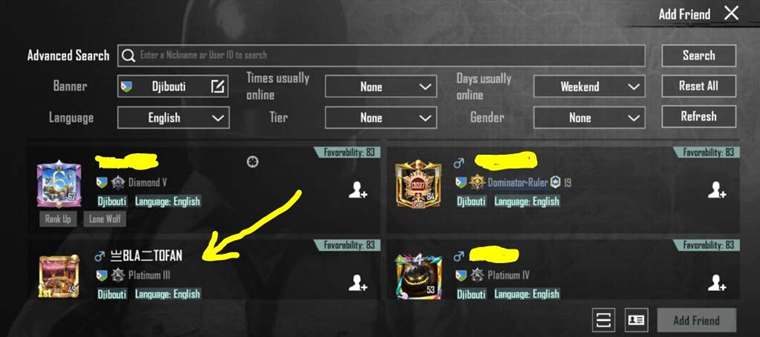
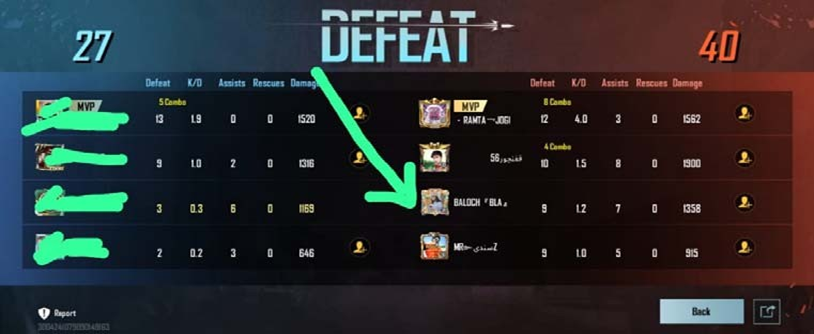
PUBG Battlegrounds is being used for radicalisation of extremism, specifically by the sympathisers of banned Baloch ethno-nationalist and separatist groups such as the Baloch Liberation Army (BLA) and the Baloch Liberation Front (BLF), as a platform to show allegiance, membership, or loyalty. Recently, it has been reported that certain PUBG players signal affiliations with BLA and BRA by embedding the names of militant entities directly into their aliases, such as “BRAS BULBUL”, “BALOCH BLA”, and “BLA TOFAN” (screenshots attached). The use of the Djibouti national flag is also a common pattern to hint at the Baluchistan independence movement and to show support for BLA, as the flags are similar in certain aspects.
Key Takeaways
- Extremist non-state actors in Pakistan are using PUBG
- Flags and aliases are being used to indicate membership or sympathies for certain violent groups.
- Use of the Djibouti flag and usernames with similar letters to show support for BLA or Baluch independence is quite common.
In recent years, demand for gaming platforms has risen significantly worldwide. As the gaming market has expanded into a $213.9 billion industry[1], these platforms have attracted the attention of extremist actors as well as security researchers. European regional institutions such as the Radicalisation Awareness Network (RAN) and the European Counter-Terrorism Coordinator have classified digital gaming spaces as ‘hotbeds’ for radicalisation[2]. The EU Terrorism Situation and Trend Report (TE-SAT) identified the increased use of digital devices and gaming platforms during the COVID-19 pandemic as a major factor, creating opportunities for radicalisation actors to reach young people and disseminate propaganda. One of the most widely played digital games, previously known as PlayerUnknown’s Battlegrounds, is now called PUBG: Battlegrounds. It has been downloaded over 1.75 billion times across all variants globally as of January 2026, and South Asia is the hotspot region[3]. Meanwhile, Pakistan is particularly relevant, where PUBG Mobile not only enjoys enormous popularity but also commands a large domestic player base.
PUBG Mobile is a free-to-play squad-based combat game. It is an imitation of a battleground where players get to choose if they want to play solo, as a duo or as a team of a few. The game begins with players parachuting. It takes players to various locations, along with the ejection option at a suitable time. The game also allows players to customise their clothing, and then players are supposed to search for weapons, vehicles, and gear to enhance their combat capability across various locations on the map. Players get to choose between first-person and third-person perspectives to take out everyone else and outlast in the end. The war-torn environment visuals in the game stimulate players’ physiological and psychological thrills by pushing them into complex combat areas to extract survival gear while killing and looting other players. simulacrum appears to be a faithful replica but is a copy without an original.
In PUBG “simulacrum appears to be a faithful replica”[4] creating thrill by keeping the match loop unpredictable, where one life per match raises the stakes and multiplayer combat options increase social bonding while making the game more dramatic and competition fiercer. The constant thrill and unpredictability have made the game highly entertaining and addictive, resulting in massive popularity.
At times, the game’s massive popularity has also caused various state-level controversies in Pakistan. It was temporarily banned in Pakistan in 2020 by the Pakistan Telecommunication Authority (PTA) due to a rising number of complaints about its addictive nature and negative impacts on the psychological and physical health of children. A few weeks later, the Islamabad High Court lifted the ban. Although there is no officially confirmed precise figure for the total number of users in Pakistan, the public’s growing interest in PUBG tournaments and corporate sector involvement demonstrates its phenomenal success and immense popularity. In 2022, a total of 23 teams participated in the national-level championship held by PUBG Mobile in Lahore. A fierce esports competition for a $30,000 prize pool showed how deeply PUBG is embedded in Pakistan’s youth esports culture.
But with massive popularity comes huge risks; a few saw it coming. Millions of Pakistanis play it, but several of them seem to play it differently. Two patterns in the game have been standing out lately because of their direct or indirect relevance to Baluchistan. The first pattern is the use of letters similar to groups’ initials in their username whereas the second pattern is about the selection of the Djibouti national flag as an in-game banner. The use of these two patterns is predominantly seen in games where players signal affiliations or sympathy with the Baloch Liberation Army (BLA) and the Baloch Republican Army (BRA) by embedding the names of militant entities directly into their aliases, such as “BRAS BULBUL”, “BALOCH BLA”, and “BLA TOFAN” (screenshots attached). The use of the Djibouti national flag is also a common pattern to hint at the Baluchistan independence movement and to show support for BLA, as the flags are similar in certain aspects.
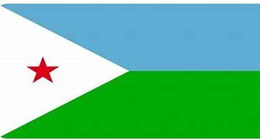
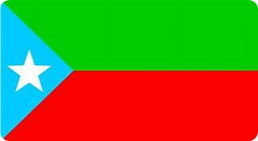
Since the gaming platforms are built to give free hand to players as a form of self-expression, in order to customise aliases, clan tags, and avatars. PUBG is also programmed to let any player choose any username or flag they want. The feature that was created with the intention to enhance mutual engagement among the players and boost community building is now being exploited by militant supporters and sympathisers.
The gaming platform is being used to declare associations publicly with proscribed militant organisations. The game itself is not merely a socialising platform with chatrooms, but a combat simulation environment mirroring real-world events, glorifying violent activities as well as the extremist organisations. Despite all these rising concerns and complaints, no action has been taken by Krafton, a South Korean holding company, which owns PUBG, or the Chinese tech giant Tencent, which developed its mobile version.
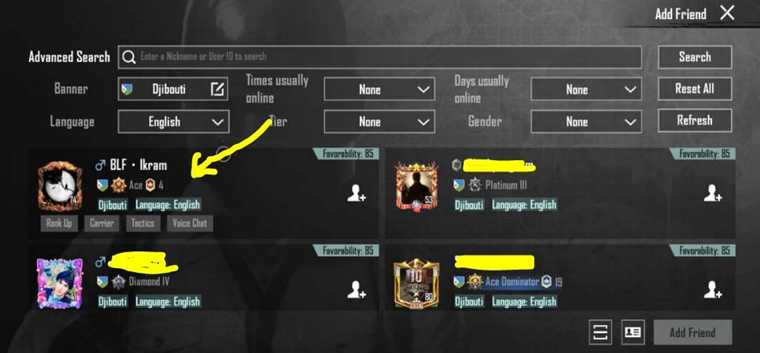
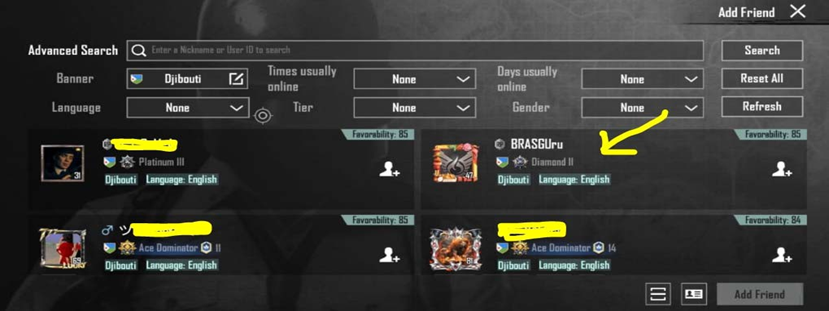
This matter has become a security concern for Pakistan since 2024, when the police in Swat found out that a group affiliated with banned Tehreek-i-Taliban Pakistan used “PUBG to practice and motivate their group members for battle against the state and would use the chat room for communication,” said the district police officer of Swat, Dr Zahidullah[5]. As per the old and current trends in the game Paksitani counter terrorism authorities must raise concerns with game development and regulatory authorities to share intelligence in this regard. State authorities should establish mechanisms to regulate content accessibility on these platforms and accountability frameworks to counter extremist content. Even though PTA has been engaging with multiple gaming operators previously for dialogue on safety controls, with every day’s advancement in features, Pakistan needs to develop a more thorough approach by creating a formal reporting channel between NACTA and PUBG’s regional operator to address militancy-related concerns. Similarly, players who are open to discussion can be contacted to gather information across multiple servers. A smartly strategised approach can bear fruitful results, leading to the arrest, capture or elimination of high-value targets.
Inside the game its quite easy to spot sympathisers of certain militant groups. One just needs to open the ‘Add Friend’ option and then select the Djouboti national flag. After that, with a single search, countless names of players would pop up with a similarity among them (screenshots). These accounts belong to either brainwashed innocent children or active members of militant organisations disguised as players. This is quite a dangerous trend, causing harm not just to Baluch people but to the whole of Pakistan as well. The following are some screenshots from the game. Although there are no official figures for the actual number of PUBG players to be quoted, participation numbers of players in the national championship suggest immense popularity among children, young students and adults. State authorities must act to counter all these anti-state illicit activities taking place on these gaming platforms.
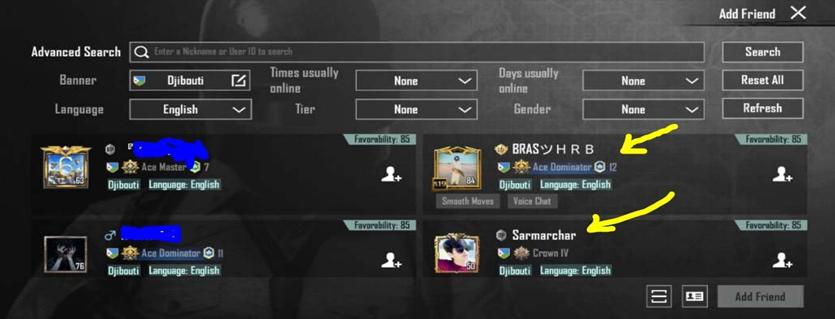
This scenario is not unique to Pakistan; in the past, ISIS used a first-person shooter (FPS) genre to mimic a real-life shooting experience to train recruits. Even in New Zealand, white supremacist-motivated extremist attacks took place where Muslims were targeted. The attacker gamified the massacre by using a head-mounted GoPro camera to imitate the first-person perspective as in shooter video games; meanwhile, he livestreamed it.[6] From Hezbollah’s spinoff of bestseller ‘Call of Duty’ war-like video game[7] to far-right German groups’ release of Heimat [Homeland] Defender: Rebellion[8] shooter game, there are countless other examples of these kinds of incidents. With everyday advancements, new features are being launched in games. Gamification is becoming a tool for militants to train, recruit, and communicate with other members without getting tracked. The production of new games and the modification of existing ones to convene people with similar radical ideologies to instigate violence is proliferating. With every new advancement in features, the popularity of video games is going to grow, whether it is one game or another, and it would lead to increased exploitation by extremist actors or their supporters. States should establish a regulatory framework to protect the privacy of legitimate users while monitoring suspicious or unlawful activities on these platforms.
References
[1] Arthur Sullivan, ‘Gamescom 2026: What’s next for the Gaming Industry?’, Dw.Com, Deutsche Welle, 26 August 2026, https://www.dw.com/en/gamescom-2026-gaming-industry-future/a-78502849.
[2] Linda Schlegel, ‘Extremists” Use of Gaming (Adjacent) Platforms Insights Regarding Primary and Secondary Prevention Measures’, Europa.Eu, 2026, https://home-affairs.ec.europa.eu/document/download/9ec83092-d946-45d8-a3d7-6e790d5dbf4e_en.
[3] Nibble Team, ‘Most Popular Downloaded Apps in 2026 (Global Ranking)’, Nibble-App.Com, Nibble, 31 May 2026, https://nibble-app.com/blog/most-popular-downloaded-apps.
[4] Lambok Hermanto Sihombing, ‘PUBG; between REAL and Unreal’, Jurnal Ilmiah Mandala Education 8, no. 4 (2022), https://doi.org/10.58258/jime.v8i4.3938.
[5] Umer Farooq, ‘Militants Used Video Game Features in Swat Police Station Attack, Claim Officials’, Dawn, 16 September 2024, https://www.dawn.com/news/1859209.
[6] Sam Andrews, ‘The “First Person Shooter” Perspective: A Different View on First Person Shooters, Gamification, and First Person Terrorist Propaganda’, Games and Culture 19, no. 1 (2023): 155541202311537, https://doi.org/10.1177/15554120231153789.
[7] Agency, ‘Lebanon’s Hezbollah Launches Syrian War Video Game’, Mail & Guardian, 28 February 2018, https://mg.co.za/news/international/2018-02-28-lebanon-s-hezbollah-launches-syrian-war-video-game/.
[8] Tim Hume, ‘Page Restricted’, Vice.Com, 21 September 2020, https://www.vice.com/en/article/germany-game-heimat-defender-identitarian/.