
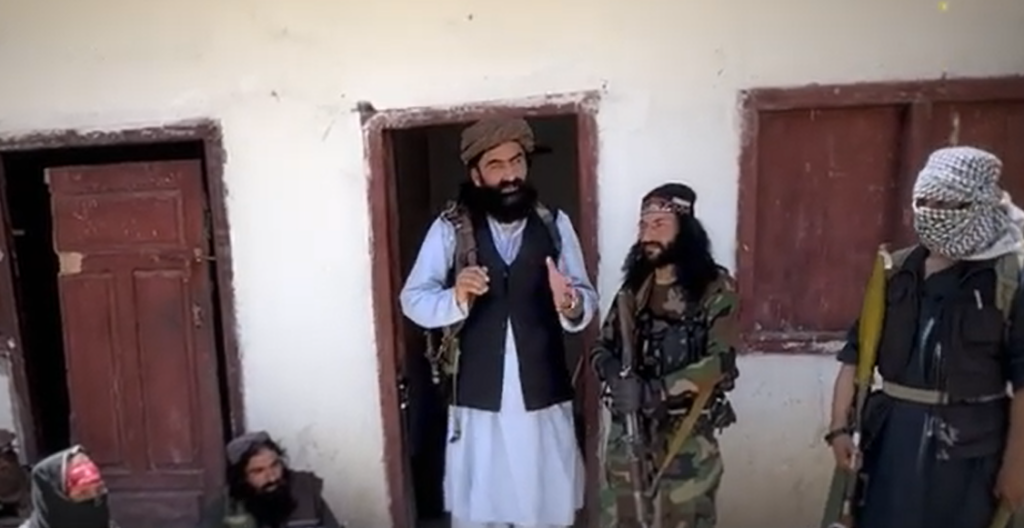

On 4 August 2026, the Tehreek-e-Taliban Pakistan’s (TTP) central media wing, Umar Media, released a 23-minute propaganda video featuring the group’s emir, Mufti Noor Wali Mehsud, also known by his nom de guerre Abu Mansur Asim. The production, titled “Between the Companions of the Path of Jihad and the Public — From Khyber to Kurram: Tour, addresses to the Mujahideen, and public meetings of the Emir of Tehreek-e-Taliban Pakistan”, presented Mehsud moving through mountainous terrain, meeting armed fighters, addressing gatherings, and interacting with individuals described as members of the local population.
The release represented Noor Wali Mehsud’s first confirmed major visual appearance in 2026. His last widely circulated video appearance before this came in October 2025, when Umar Media released an approximately eight-minute video after reports emerged that he had been killed in an alleged airstrike in Kabul. That October video served primarily as a proof-of-life message. Mehsud denied reports of his death, claimed that he was present in Pakistan’s Khyber district, specifically mentioning areas associated with the Kuki Khel and Qambar Khel tribes, and rejected allegations that TTP leadership operated from Afghan territory.
The gap of nearly ten months between the two major visual appearances is significant. During this period, audio messages attributed to Mehsud were circulated on social media and statements by him were released by Umar media, but no comparable video showing the emir himself was publicly circulated. Therefore, the August 2026 release appears designed not only as a routine propaganda production but also as a deliberate demonstration of leadership visibility and continuity.
The title “From Khyber to Kurram” also carries strategic significance. The reference to Khyber connects with Mehsud’s October 2025 appearance, where he claimed to be operating from Khyber territory after reports of his death. By extending the geographic narrative toward Kurram, TTP appears to project an image of leadership mobility and presence across the broader border region. However, open-source analysis has not independently confirmed the exact filming locations, and the terrain alone does not provide sufficient evidence to verify the claimed route.
Beyond the visual display of leadership presence, the video appears to serve multiple strategic communication objectives.
Countering the Narrative of Afghan Sanctuary
One of the most important messages conveyed through the video is the attempt to challenge allegations that TTP leadership operates primarily from Afghan territory. Pakistan has repeatedly accused the Afghan Taliban government of allowing TTP militants and leadership figures to operate from Afghan soil, a claim that has been central to tensions between Islamabad and Kabul. The August 2026 production appears designed to reinforce a counter-narrative: that TTP is operating within Pakistan and maintains local presence independent of Afghanistan. The repeated emphasis on Pakistani tribal geography, combined with the title referencing Khyber and Kurram, supports this messaging.
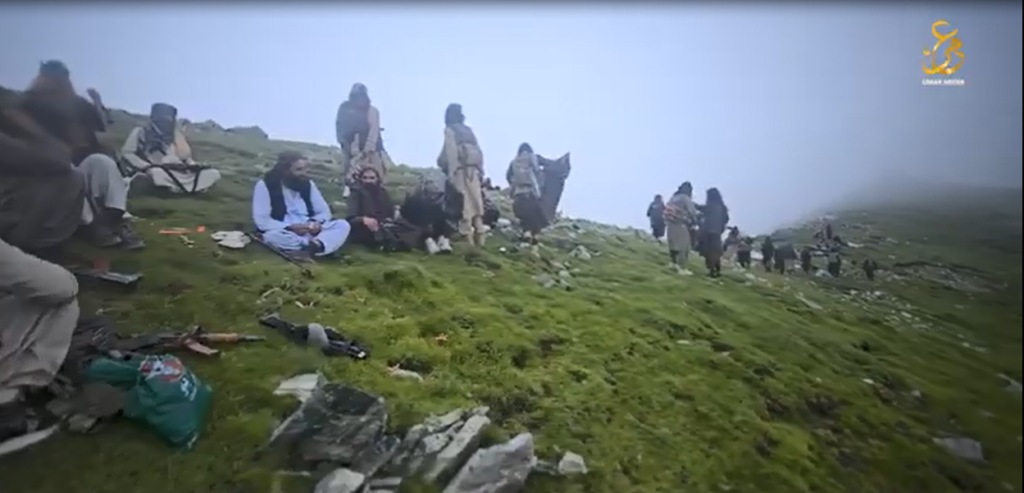
This narrative was already visible in the October 2025 proof-of-life video, where Noor Wali Mehsud explicitly stated that he was on “Khyber land” and pointed toward mountain positions that he identified as Pakistani military posts. The August 2026 video expands this message by presenting a longer sequence of movement, interactions, and gatherings, creating an impression of sustained access and mobility. While the footage cannot independently establish the precise locations, the symbolic purpose of the imagery is clear: to associate TTP leadership with Pakistan’s tribal landscape rather than Afghan territory.
Reducing Pressure on the Afghan Taliban
Closely connected to the territorial messaging is the broader political objective of reducing pressure on the Afghan Taliban government. Since the Taliban’s return to power in Afghanistan in 2021, Pakistan has consistently raised concerns regarding TTP activity and leadership presence in Afghanistan. The August 2026 video continues to counter this narrative indirectly by visually placing the organization’s leadership within Pakistan’s tribal belt. By emphasizing domestic presence, TTP can attempt to shift responsibility away from the Afghan Taliban by presenting itself as an indigenous Pakistani movement rather than a group dependent on Afghan sanctuary.
Justifying continued militancy and defining the armed campaign
Another significant objective of the video is to justify the continuation of TTP’s armed campaign and reinforce the idea that operations against Pakistani security forces should remain ongoing. In his address, Noor Wali Mehsud emphasizes maintaining operational momentum and encourages fighters not to reduce pressure on military targets, including personnel outside active combat situations. The message attempts to broaden the perceived scope of the conflict by portraying security personnel as continuous representatives of the state rather than only battlefield actors. The speech also draws upon social and religious references to strengthen this argument. By invoking Pashtun customs and the views of religious scholars, the message seeks to frame armed action as consistent with both local traditions and religious reasoning. This combination is aimed at reinforcing commitment among supporters and reducing hesitation regarding continued attacks.
Ideological justification of jihad and martyrdom
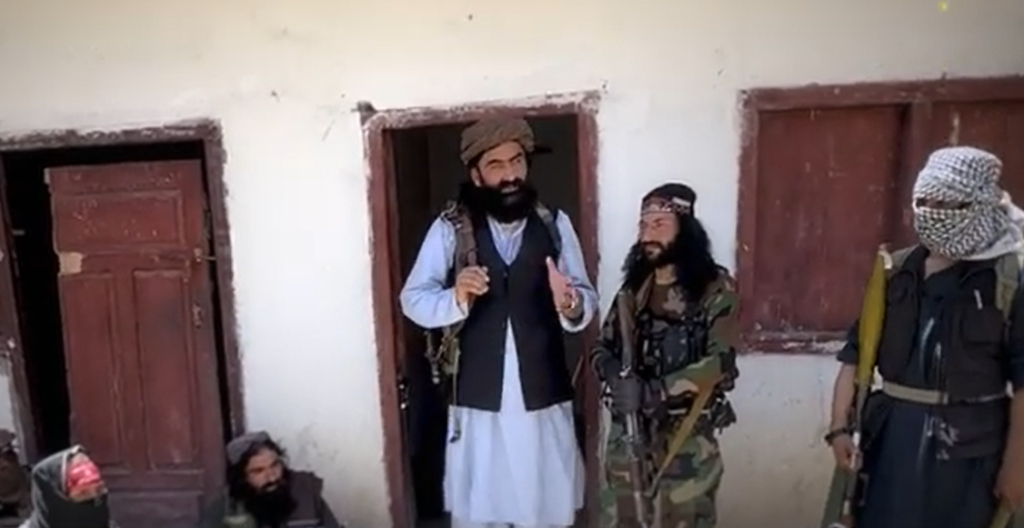
Another major objective of the video is ideological reinforcement. In his address, Noor Wali Mehsud frames participation in armed struggle through religious concepts of victory and martyrdom. He states that for a fighter following the example of Khalid bin Walid, there are two possible outcomes: victory or martyrdom. He further argues that once a fighter accepts that death occurs only at its appointed time, fear of battle disappears. This message seeks to strengthen commitment among existing members by presenting sacrifice as a religious obligation rather than merely a tactical choice. The speech also contains a direct recruitment appeal. Mehsud calls upon individuals across Pakistan to join TTP, describing it as the organization engaged in jihad for the establishment of an Islamic system in Pakistan. Therefore, the speech functions simultaneously as ideological reinforcement for existing supporters and a recruitment message aimed at potential sympathizers.
Reinforcing Organizational Unity After Fragmentation
A recurring theme throughout the video is organizational unity. In his address, Noor Wali Mehsud calls on militants across Pakistan to join TTP, describing it as the principal organization engaged in jihad for the establishment of an Islamic system in the country. He urges prospective recruits to come under the TTP’s banner, presenting the group as the appropriate platform through which armed struggle should be pursued.
This emphasis closely mirrors themes promoted in the July 2026 edition of Majallah Taliban, the TTP’s monthly Urdu-language propaganda magazine. Chapter 13, titled Why Should Jihad Be Carried Out Under the Banner of Tehreek-e-Taliban Pakistan?, argued that militants in Pakistan should operate under one organization, one leadership, and one banner. Drawing on historical examples—including the Afghan Taliban’s consolidation of authority and other cases of fragmentation within Muslim movements—the article argued that unity is essential for success.
Although both the article and the address do not explicitly mention Jamaat-ul-Ahrar (JuA), the arguments strongly reflected the TTP’s post-fragmentation narrative following the JuA split and the emergence of competing factions. Both maintain that separate militant groups operating within the same country weaken the broader struggle and portrayed the TTP as the largest and most established militant organization in Pakistan.
Connecting the TTP Narrative with Global Jihadist Causes
The speech also places TTP within a wider ideological environment by referring to conflicts beyond Pakistan. Noor Wali Mehsud offers prayers for Muslims and militants in Kashmir, Palestine, and other parts of the world. These references serve two purposes. First, they connect TTP’s local campaign with a broader transnational jihadist narrative. Second, they attempt to portray the organization as part of a global struggle rather than an exclusively domestic militant movement. The inclusion of Palestine and Kashmir is particularly significant because both issues hold strong symbolic importance among militant and Islamist audiences in South Asia. By invoking these conflicts, TTP attempts to situate its activities within a wider ideological framework.
Creating an Image of Local Acceptance and Community Connection
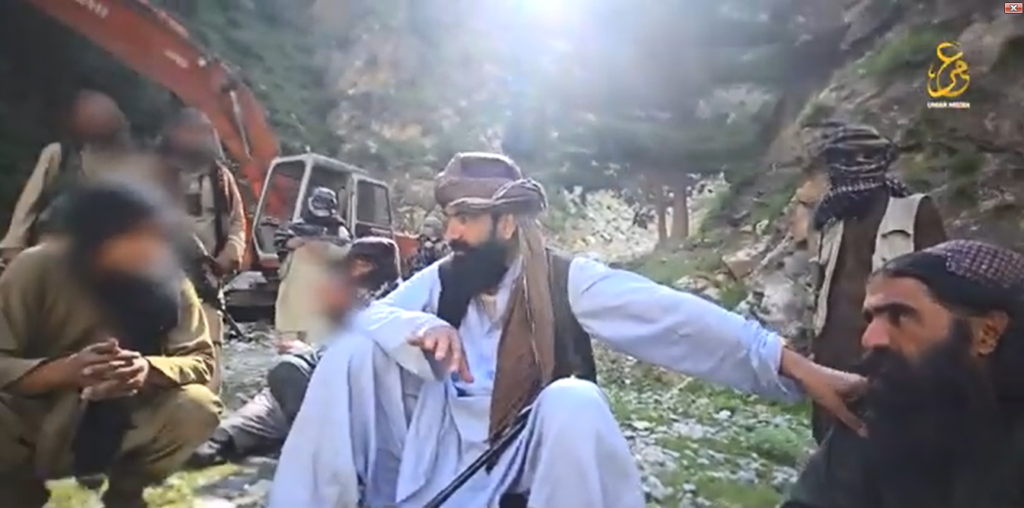
A further objective of the video appears to be the projection of social acceptance among local communities. In a scene, it is shown that Noor Wali Mehsud is interacting with local mine workers in Para Chamkani area of Kurram. During conversation, he assures local workers that if they face problems from Taliban members or local tribes, TTP personnel will address their concerns.
He states that Muhammad Amir (a TTP commander) has been assigned responsibility in the area and encourages people to seek assistance from the group if needed. These scenes are designed to portray TTP not merely as an armed organization but as an entity capable of providing dispute resolution and local assistance.
The closing narration reinforces this emotional dimension by describing conversations between fighters and local residents as the “true soul” of the journey, emphasizing shared hardship, emotional connections, and collective memories.
This messaging reflects a common pattern in militant propaganda: combining armed imagery with narratives of community service and personal relationships to build legitimacy among targeted audiences.
Conclusion
The August 2026 Umar Media video should therefore be viewed within the broader context of the evolving Pakistan–Afghanistan security dispute. Beyond its internal messaging to fighters and supporters, the release appears designed to challenge one of Pakistan’s central allegations against the TTP — that its leadership and operational networks are based in Afghanistan. By presenting Noor Wali Mehsud in mountainous areas claimed to be within Pakistan, the video seeks to reinforce the narrative that the TTP maintains an indigenous presence inside Pakistan rather than relying on Afghan territory.
At the same time, the production reflects the TTP’s broader effort to demonstrate resilience following increased counterterrorism pressure and repeated claims targeting its leadership. Through images of leadership mobility, interaction with local populations, ideological messaging, and appeals for unity, the group attempts to portray itself as an organized movement with social connections and operational continuity.
Ultimately, the release highlights the central role of information warfare in the TTP’s strategy. It serves not only as a message to fighters and supporters but also as a direct response to the regional narrative surrounding militant safe havens, particularly the contested question of TTP’s presence in Afghanistan. By combining domestic legitimacy claims with cross-border messaging, the video seeks to influence perceptions among multiple audiences — including Pakistani authorities, the Afghan Taliban, local communities, and militant supporters — about the organization’s survival and future trajectory.